
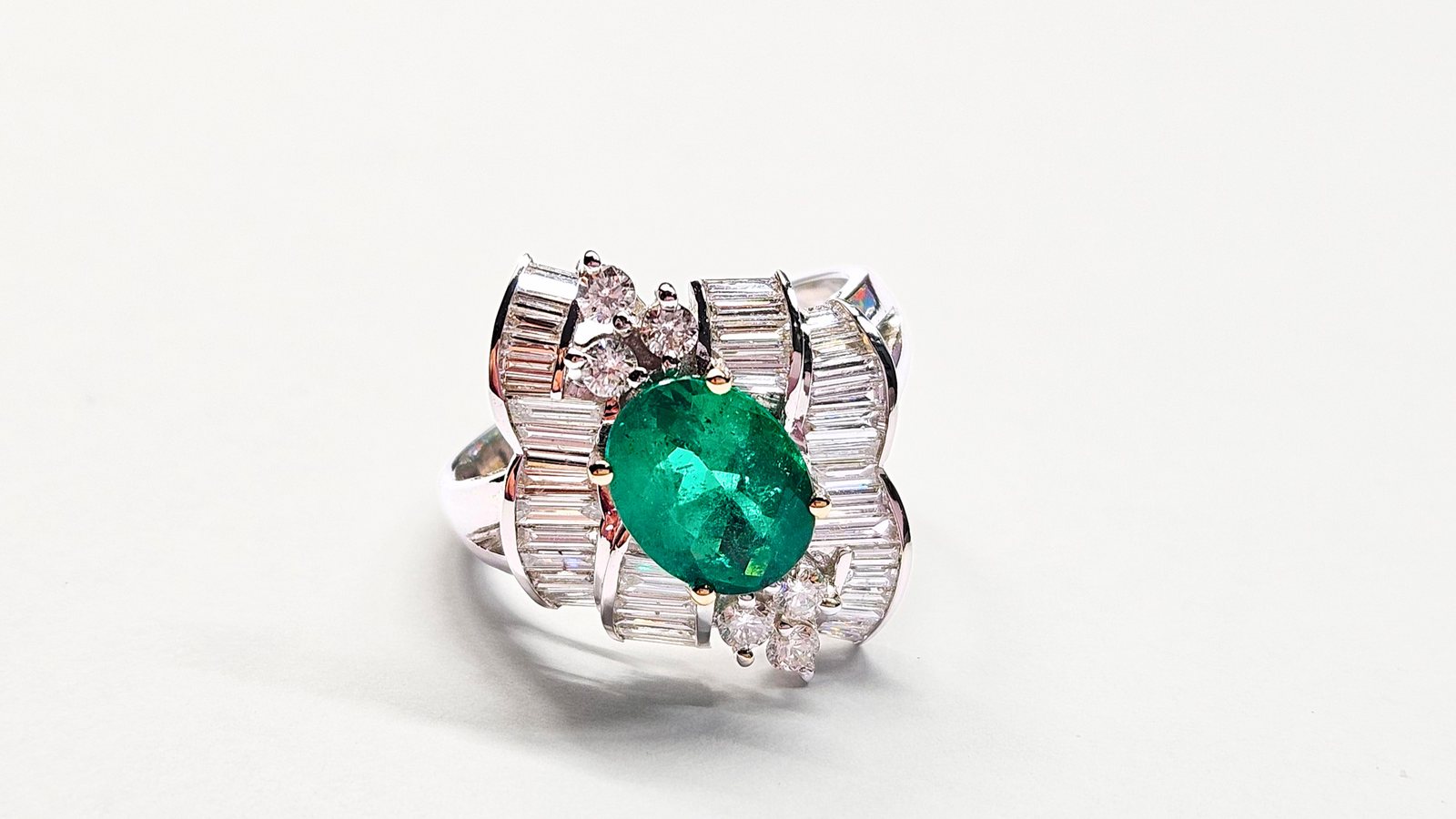
The question gets asked often at Safir, and the honest answer requires some precision. Coloured gemstones as a category are not an investment. Fine, natural, certified coloured gemstones, bought intelligently and from a position of knowledge, can be a compelling store of value and, in some cases, a genuine investment with strong long-term returns.
The difference is everything.
What drives gemstone value
Three properties underpin gemstone value, and all three must be present for a stone to hold its worth over time:
Rarity. Fine natural gemstones are genuinely rare. The finest Burmese rubies, Kashmir sapphires and Colombian emeralds are irreplaceable. New mine discoveries are increasingly uncommon. Supply is effectively fixed; demand grows with the global wealth base.
Desirability. Rarity only matters if people want it. The coloured gemstone market has deepened significantly over the past two decades as collectors in Asia, the Middle East and the Americas have become increasingly sophisticated buyers.
Durability. A gemstone must survive to be worth something. The top investment stones (ruby, sapphire, spinel and emerald) score 7.5 to 9 on the Mohs hardness scale and survive the handling of centuries.
Which stones have performed best
Auction records tell the clearest story. Over the past thirty years, top-quality examples of these have achieved the strongest appreciation:
Fine unheated Burmese ruby above two carats: consistently the highest per-carat prices of any gemstone at major auctions. The 2015 Sunrise Ruby sold for US$1.2m per carat, the highest per-carat price ever achieved at auction.
Kashmir sapphire: effectively no new production since the 1930s. Prices have appreciated steadily as existing stones are recycled between collectors.
Unheated Ceylon sapphire of fine colour: a liquid, internationally recognised market with strong demand.
Fine Colombian emerald: the benchmark for quality; enduring demand from collectors and jewellery houses globally.
Padparadscha sapphire and fine spinel: niche but growing markets with strong appreciation potential for the very finest stones.
The critical role of certification and treatment status
This is where most poor investments are made. A treated stone, however beautiful, is worth a fraction of its natural, untreated equivalent. The difference between a heat-treated Ceylon sapphire and an untreated one of the same appearance can be 40–60% in value. For Burmese rubies, the premium for unheated stones can be multiples.
This is why gemological certification is the foundation of any gemstone investment. Without a certificate from a credible lab confirming:
- Natural origin (not synthetic or simulant)
- Treatment status (unheated, minor heat, fracture-filled)
- Origin where determinable
…you cannot confidently value, insure, or sell the stone.
The risks. Be clear-eyed.
Gemstones are illiquid. Unlike shares or gold, you cannot sell a gemstone at a moment’s notice at a known price. Resale requires finding the right buyer, whether another collector, a dealer or an auction house, and this takes time.
Gemstones are also subject to changing fashion and market sentiment. Colours and cuts that command premiums today may not in twenty years.
And gemstones require expertise to buy correctly. The difference between a good buy and a poor one is often invisible to the untrained eye; it lives in colour quality, treatment status and origin documentation that only a gemologist can assess.
How to invest in gemstones intelligently
- Buy the best quality you can afford, not the largest.
- Insist on certification, from an independent lab, with treatment status clearly stated.
- Prioritise natural and untreated. This is where the premiums live.
- Focus on recognised origins. Burmese, Ceylon, Colombian and Kashmir stones have the strongest international markets.
- Buy from a dealer who sources directly and can explain the stone’s history.
- Think long-term. Fine gemstones are not a short-term trade; they are a store of wealth over decades.
At Safir, we published Natural Coloured Gemstones: A Timeless Investment as a reference for serious collectors. We discuss our thinking in person, without obligation.