
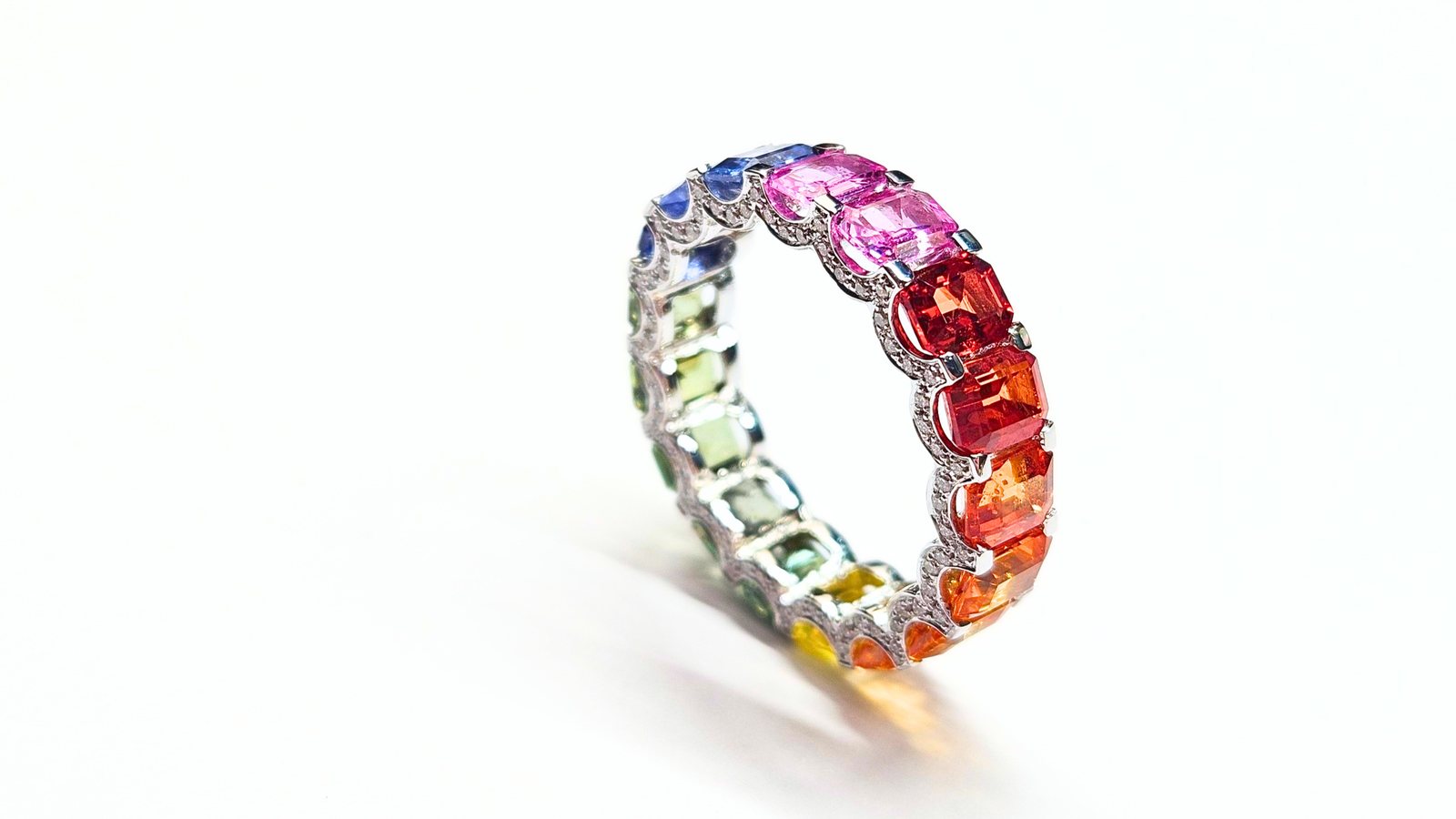
The sapphire market is deep and global, and easy to get wrong without proper knowledge. Unlike diamonds, where the 4Cs are well understood and grading is standardised, coloured gemstone quality is more nuanced and more open to interpretation. This guide gives you what you need to buy a sapphire with confidence.
Start with colour: it determines most of the value
In any coloured gemstone, colour is the primary value driver. For sapphire, three elements of colour matter:
Hue. Blue is the classic, but “blue” covers everything from pale sky blue to near-black. The ideal hue is a medium to strong blue, leaning slightly toward violet-blue in the finest Ceylon stones, or a pure, vivid blue in the finest Burmese specimens.
Saturation. This is the intensity or richness of the colour. The finest sapphires have vivid or strong saturation, with no grey or brown tones diluting the blue. Washed-out, pastel sapphires are worth significantly less.
Tone. This is the lightness to darkness of the colour. Too light, and the stone looks watery; too dark, and it appears black in anything but direct light. The sweet spot is medium to medium-dark.
A stone that looks beautiful in the shop under spotlights but fades to a dark, murky blue in normal indoor light is a poorly toned stone. Always view a sapphire under multiple light sources.
Clarity: what you should and shouldn’t accept
Sapphires almost always have inclusions. A completely flawless sapphire is extraordinarily rare. The standard for fine sapphires is “eye-clean”: inclusions not visible to the naked eye from normal viewing distance.
Avoid: needles or fingerprints that break the surface (this affects durability); extensive fractures; inclusions in the visual centre of the stone that interrupt colour.
Accept: minor inclusions visible only under magnification; silk (fine rutile needles) that contributes to a velvety appearance in some Ceylon stones.
Cut: it must do justice to the colour
Unlike diamonds, sapphires are not cut to maximise brilliance; they are cut to maximise colour. A well-cut sapphire should:
- Show vivid, even colour across the stone without large colourless or “windowed” patches in the centre
- Show strong light return, with no dark or “dead” areas from above
- Be symmetrical with well-finished facets
Cheap sapphires are often cut to maximum weight, not maximum beauty. The cut matters.
Carat: where prices step up
Fine sapphires above two carats become significantly rarer, and prices per carat increase substantially above this threshold. For investment purposes, three-carat-plus fine stones from notable origins command the strongest demand.
Origin: where it was mined matters
For investment-grade sapphires, origin is often documented and priced accordingly:
Kashmir. The most prized origin of all: a velvety cornflower blue found in the Himalayan mountains. Kashmir production effectively ceased in the early 20th century; existing stones are extremely rare and valuable.
Burma (Mogok). The second most prized origin: vivid, pure blue with strong fluorescence in some stones. Burmese sapphires command a significant premium over stones from other origins.
Ceylon (Sri Lanka). The most commercially significant origin: producing a wide range of blues and fancy colours including the padparadscha. Ceylon sapphires are highly regarded and more accessible than Burmese or Kashmir stones.
Madagascar and Tanzania. Important modern sources producing fine stones. Origin premiums are lower than for the classic origins.
Treatment: always ask, always get it in writing
Heat treatment is applied to the majority of commercial sapphires to improve colour and clarity. It is widely accepted, does not harm the stone, and is priced into the market. What matters is:
- It is disclosed, verbally and on the certificate.
- It is only heat treatment. Beryllium diffusion and lead-glass filling are more aggressive treatments that significantly reduce value and should be clearly distinguished.
Untreated (no-heat) sapphires from quality origins command a significant premium, typically 30–50% or more, over treated stones of similar appearance.
Why certification is non-negotiable
A gemological certificate from a reputable lab confirms the stone’s species, colour, origin (where determinable) and treatment status. It is the only objective documentation of what you own, and it is essential for:
- Resale: buyers require documentation.
- Insurance: valuations need a paper trail.
- Trust: without a certificate, you are taking the seller’s word for it.
At Safir, every sapphire we sell can be checked by our gemologists at Publika, with a written certificate from our associated laboratory available on request. We welcome questions about methodology and are happy to explain every certificate detail.
Putting it all together
The best sapphire for you is one where colour delights you under all lighting conditions, the stone is eye-clean, the cut is balanced, the origin is documented, and the treatment status is fully disclosed in writing. Budget should guide carat size, not colour quality. A smaller stone with excellent colour is always a better buy than a larger stone with mediocre colour.
View our natural sapphire collection → or book a private consultation to see stones in person.